

Key Takeaways
- A horizontally impacted wisdom tooth grows sideways and presses against nearby teeth.
- Causes: lack of space, wrong eruption angle, or genetics.
- Symptoms: jaw pain, swelling, limited mouth opening, bad breath.
- Can lead to infection, tooth damage, and misalignment if untreated.
- Surgical extraction is the best treatment.
- Diagnosis involves exams, X-rays, and 3D imaging.
- Early treatment prevents complications.
- Coral Dental Care in Salem, MA, offers safe, expert extraction services.
Have you ever felt a dull ache at the back of your jaw that keeps getting worse every time you chew or yawn? You assume it’s just normal wisdom tooth pain until your dentist tells you it’s a horizontally impacted wisdom tooth.
This condition can silently damage nearby teeth and lead to serious oral complications if left untreated. Let’s understand what it means and why timely dental care is essential.
What Is a Horizontally Impacted Wisdom Tooth?
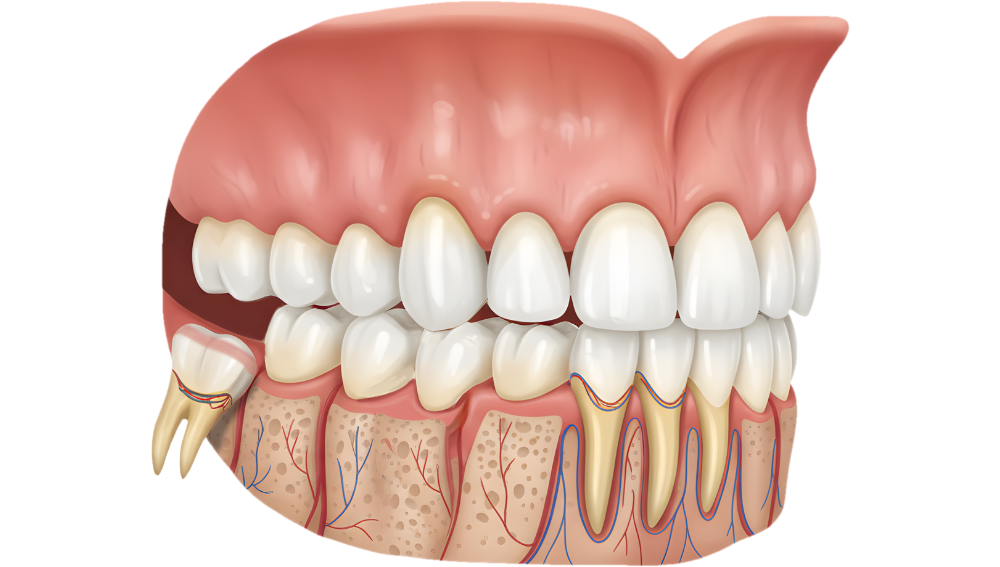
A horizontally impacted wisdom tooth occurs when the tooth grows sideways, at a 90-degree angle, instead of vertically. It often pushes directly against the molar near it, causing pain, misalignment, and even structural damage over time.
It is different from a vertically impacted tooth, which grows upward but remains trapped beneath the gum or bone. Horizontal impaction is more severe because it exerts constant pressure on adjacent teeth, increasing the risk of infection and decay.
How Horizontal Impaction Occurs?
- When a wisdom tooth becomes impacted horizontally, it grows at a right angle rather than straight and upwards, often pressing against the second molar.
- This continuous pressure can lead to tooth misalignment, enamel erosion, or nerve pain.
- Because of its trapped position, it’s also hard to clean properly, increasing the chances of decay, gum disease, and infection around the site.
In short, this sideways growth doesn’t just affect one tooth; it can disrupt your entire bite alignment and oral health.
What Are the Causes of a Horizontally Impacted Wisdom Tooth?
A horizontal impaction on a wisdom tooth can occur due to various causes mentioned below:
-
Lack of Space
Wisdom teeth are the last to erupt, and by the time they do, the jaw often does not have enough room. Without enough space, the tooth can become stuck, turning sideways beneath the gum.
-
Incorrect Angle
Instead of growing vertically, the tooth may form at a 90-degree angle, pushing into the second molar. This incorrect direction is one of the primary causes of horizontal impaction.
-
Genetic Predisposition
Genetics plays a role in deciding the jaw size and tooth alignment. People with smaller jaws or crowded teeth may be more likely to develop horizontally impacted wisdom teeth.
What Are the Common Horizontally Impacted Wisdom Tooth Symptoms?
You may not notice the problem right away, but as pressure builds, discomfort increases. Common symptoms for this include:
- Jaw Pain: Persistent pain or tightness around the jawline or ear.
- Swelling and Inflammation: Puffiness in the gums or cheeks near the affected tooth.
- Difficulty Opening the Mouth: Limited jaw movement, especially when chewing or speaking.
- Bad Breath: Caused by trapped bacteria and food debris around the impacted area.
Why Are Horizontally Impacted Wisdom Teeth a Concern?
If you leave this condition untreated, it can cause serious oral health issues. The sideways pressure can damage nearby teeth, cause crowding, or lead to infection, cysts, and bone loss around the jaw.
Over time, it can even impact your bite alignment, making early detection and treatment extremely important for long-term oral health.
How are Horizontally Impacted wisdom Teeth Removed?
Surgical Extraction
The most common and effective treatment for horizontal impaction is surgical extraction, which ensures complete horizontal impacted wisdom tooth removal of the problematic tooth under safe, controlled conditions.
-
Anesthesia
The dentist or oral surgeon will use local anesthesia to numb the area, sedation anesthesia to keep you relaxed, or general anesthesia if multiple teeth need removal.
-
Procedure
A small incision is made in the gum to access the tooth. The dentist may remove bone covering the tooth’s root and extract the tooth in sections if necessary. This approach minimizes trauma and speeds up recovery.
-
Post-Surgical Care
After the extraction of a horizontally impacted wisdom tooth, you’ll receive care instructions to promote healing, such as using cold compresses, taking prescribed pain medication, and avoiding hard foods.
Most patients recover within a few days, though full healing may take a couple of weeks.
How Do Dentists Diagnose a Horizontal Impaction?
Dentists use a combination of exams and imaging to confirm horizontal impaction:
-
Dental Examination
- Oral Inspection: The dentist checks for redness, swelling, or tenderness in the gum tissue.
- Medical History: You’ll be asked about any ongoing discomfort or jaw-related symptoms.
-
X-rays
- Panoramic Radiograph: Provides a complete view of your jaw, revealing the exact position of the wisdom tooth.
- Assessing Damage: X-rays also show if nearby teeth or bone structures are being affected.
-
Advanced Imaging
- 3D Imaging: In complex cases, 3D scans give detailed insights into the tooth’s alignment and its relationship with the jawbone.
Early diagnosis allows your dentist to take timely action, preventing long-term complications and reducing the risk of infection or nerve damage.
If you are experiencing pain, you need to consult a dentist immediately. Coral dental care offers personalised care and treatment for all your procedures in a safe environment. With a skilled dental team that provides gentle, safe, and effective extraction procedures using advanced imaging and anesthesia options for your comfort.
Get expert guidance for the horizontal wisdom tooth removal at Coral Dental Care in Salem, MA
A horizontally impacted wisdom tooth isn’t just another dental inconvenience; it’s a condition that can silently affect your smile and oral health. With early diagnosis and expert care from Coral Dental Care in Salem, MA, you can protect your teeth, preserve your comfort, and ensure lasting oral wellness.
Frequently Asked Questions
-
Can a horizontally impacted wisdom tooth fix itself or erupt normally?
No, it cannot. These teeth are blocked by bone and other teeth, making natural eruption impossible.
-
What are the risks of leaving a horizontally impacted wisdom tooth untreated?
Untreated impactions can lead to tooth decay, gum infection, cysts, jaw pain, or shifting of nearby teeth.
-
How soon should a horizontal wisdom tooth be removed?
It’s best to remove it promptly, even if it’s not causing visible symptoms, to prevent further complications.
-
Are there alternatives to surgery for treating a horizontally impacted wisdom tooth?
Non-surgical management is rarely effective and only considered if the tooth poses no risk. Surgical extraction remains the standard and safest treatment.