

Quick Answer:
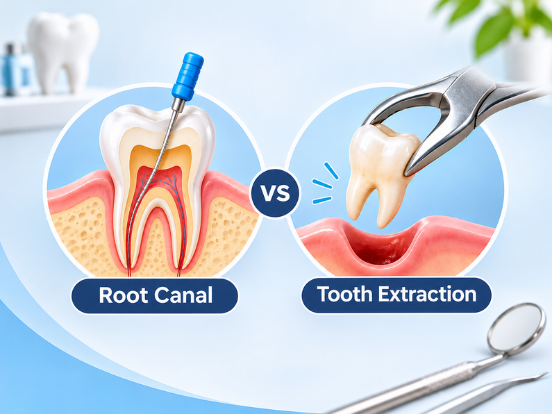
A root canal is usually recommended when a damaged or infected tooth can still be saved. Tooth extraction may be necessary when the damage is too extensive to restore or the tooth is affecting surrounding teeth and gums.
A badly aching tooth can leave you wondering whether you need a root canal or whether it is better to have it removed. Both treatments deal with damaged or infected teeth, but the decision depends on how much of the tooth is still healthy. Dentists generally try to preserve your natural tooth whenever possible. However, there are situations where extraction is the more practical option.
Root Canal vs Tooth Extraction: At a Glance
| Factor | Root Canal | Tooth Extraction |
|---|---|---|
| Main purpose | Removes infected or damaged pulp from inside the tooth while keeping the natural tooth in place. | Removes a tooth that is too damaged, infected, or unstable to be restored. |
| When is it recommended? | When infection has reached the pulp but enough healthy tooth structure remains to restore it. | When severe decay, damage, fractures, or gum disease have made the tooth difficult or impossible to save. |
| Does it save the natural tooth? | Yes. The tooth stays in place after the infected pulp is removed and the inside is sealed. | No. The entire tooth is removed from its socket. |
| What happens during treatment? | The dentist removes the infected pulp, cleans and disinfects the root canals, and seals them. A filling or crown is usually placed afterward. | The dentist numbs the area, loosens the tooth, and removes it. The extraction site is then checked to support healing. |
| Recovery | You may experience mild soreness or sensitivity for a few days. Most people return to their usual activities fairly quickly. | The gums need time to heal after removal. Soreness and swelling are common in the first few days, and complete healing takes longer. |
| Long-term result | Preserves the natural tooth and helps you maintain normal chewing function. | Leaves a gap that may need a dental implant, bridge, or denture to restore chewing and prevent nearby teeth from shifting. |
What Is Root Canal Treatment?
Inside every tooth is a soft tissue called the pulp, which contains nerves and blood vessels. Deep decay, a crack, or an injury can damage this tissue and allow bacteria to cause an infection. Root canal treatment removes the infected pulp while keeping the rest of the tooth. The dentist cleans the narrow canals inside the roots, seals them, and restores the tooth with a filling or crown.
Signs You May Need a Root Canal
Certain symptoms can suggest that the pulp inside your tooth is damaged or infected. You may notice one or more of the following signs:
1. Severe Tooth Pain
Pain that starts without an obvious reason, becomes intense at night, or makes it difficult to chew can point to a problem inside the tooth. You may also notice that the pain continues even when you are not eating or drinking. If the discomfort does not settle, have a dentist examine it.
2. Lingering Sensitivity
It is normal to feel a brief reaction when you eat something hot or cold. However, if the sensitivity continues after the food or drink is gone, it may indicate damage to the pulp. You might notice a sharp sensation that stays for several seconds or longer.
3. Swollen Gums
An infection inside a tooth can spread towards the root and surrounding gum tissue. This may cause swelling near the affected tooth. Some people also develop a small bump on the gum that looks like a pimple. It may release fluid or pus, which is a reason to arrange a dental check-up.
4. Tooth Darkening
A tooth that starts turning grey, brown, or darker than the surrounding teeth may have suffered internal damage. This can happen after an injury that affects the pulp, even if the tooth does not hurt. A dentist can check whether the pulp is still healthy.
5. Chipped or Cracked Tooth
A crack or chip can expose the inner layers of your tooth to bacteria. If the damage reaches the pulp, you may develop pain, sensitivity, or an infection. The dentist will need to check how deep the crack goes before deciding whether a root canal can save the tooth.
What Happens During a Root Canal?
The procedure usually takes place over one or more appointments, depending on the condition of the tooth. Here is what you can expect during treatment.
-
1
Numbing the Area
The dentist gives you local anaesthesia to numb the tooth and surrounding area. This helps prevent pain during the procedure. You may feel some pressure, but you should not feel sharp pain.
-
2
Placing a Dental Dam
A dental dam is a small rubber sheet placed around the affected tooth. It keeps saliva away from the treatment area and prevents bacteria from entering the tooth while the dentist works.
-
3
Making an Opening
The dentist makes a small opening through the top of the tooth to reach the pulp chamber. This gives access to the damaged tissue inside.
-
4
Cleaning Out the Pulp
Using specialised dental instruments, the dentist removes the infected or damaged pulp from the chamber and root canals. This also removes tissue that could allow the infection to continue.
-
5
Disinfecting and Shaping
The inside of the tooth is cleaned and disinfected to remove remaining bacteria. The dentist also shapes the canals so they can be filled properly.
-
6
Sealing the Tooth
Once the canals are clean, the dentist fills and seals them with a suitable material. The opening is then closed with a temporary or permanent filling. Depending on how much of the natural tooth remains, your dentist may recommend placing a dental crown over the tooth to restore its strength, protect it from further damage, and help it function normally.
What Is Tooth Extraction?
Tooth extraction is a procedure in which a dentist removes a tooth from its socket. It may be recommended when severe decay, a fracture, or advanced gum disease has damaged the tooth beyond repair. Extraction may also be planned for reasons such as impacted wisdom teeth or overcrowding. Depending on the position and condition of the tooth, the dentist may perform a simple extraction or a surgical one.
Signs You May Need a Tooth Extraction
A dentist may recommend extraction when keeping the tooth could affect your oral health or when there is not enough healthy structure left to repair it. Some situations that may lead to extraction include:
1. Severe Tooth Pain
Severe or persistent pain needs attention, but it does not automatically mean the tooth must be removed. The dentist first needs to find its cause. If the pain comes from an infection that can be treated with a root canal, the tooth may still be saved. Extraction is considered when the underlying damage is too extensive to repair.
2. Advanced Tooth Decay
When tooth decay spreads deep into a tooth, it can destroy a large part of its structure. Sometimes, there are not enough healthy teeth left to support a filling or crown after treatment. In such cases, extraction may be necessary.
3. Gum Disease
Advanced gum disease can damage the tissues and bone that hold your teeth in place. As the supporting bone weakens, a tooth may become loose and difficult to retain. If the damage is severe and the tooth cannot be stabilised, the dentist may recommend removing it.
4. Impacted Wisdom Teeth
Wisdom teeth sometimes do not have enough room to come through properly. They may remain trapped beneath the gums or grow at an angle, pressing against nearby teeth. This can lead to pain, swelling, infection, or damage to neighbouring teeth. Depending on the position of the tooth and the symptoms, the dentist may recommend removing it. You can learn more about the causes and problems associated with impacted wisdom teeth.
5. Overcrowding
If your teeth do not have enough room to sit properly, an orthodontist may recommend removing one or more teeth before treatment with braces or aligners. This creates space to move the remaining teeth into better positions. Extraction in this situation is planned as part of orthodontic treatment, rather than being a response to infection or decay.
6. Trauma or Injury
An accident, fall, or sports injury can cause a tooth to break. Some fractures can be repaired with a filling, crown, or root canal. However, if the tooth breaks below the gum line or splits in a way that makes repair impossible, extraction may be the only option.
7. Non-Restorable Teeth
Sometimes, a tooth has lost too much of its structure to support any further treatment. This may happen because of repeated dental procedures, extensive decay, or a severe fracture. If the dentist cannot restore the tooth in a way that allows it to function properly, removal may be recommended.
What Happens During Tooth Extraction?
The exact procedure depends on whether the tooth is fully visible or needs surgical removal. For a straightforward extraction, the process generally involves these steps:
-
1
Numbing the Area
The dentist gives you local anaesthesia to numb the tooth and surrounding gums. You should not feel pain during the removal, although some pressure is normal.
-
2
Loosening and Removal
The dentist uses specialised instruments to gently loosen the tooth from its socket before removing it. If the tooth is broken or trapped beneath the gums, a surgical extraction may be needed. In that case, the dentist may make a small opening in the gum to reach and remove it.
-
3
Stopping the Bleeding
After removing the tooth, the dentist places gauze over the area and asks you to bite down on it. This helps a blood clot form in the socket. The clot protects the area while it heals. You may also receive instructions on eating, brushing, and caring for the extraction site over the next few days.
How Do Doctors Decide Which Treatment Is Required?
Your dentist will examine the affected tooth and may take dental X-rays before recommending a root canal or extraction. The decision depends on how much damage has occurred and whether the tooth can still be repaired.
Here are some of the things they check:
- Extent of infection or decay: X-rays help the dentist see how far the decay or infection has spread. They can also show whether the infection has reached the area around the root.
- Condition of the supporting bone: The dentist checks whether enough bone remains to hold the tooth firmly in place. Significant bone loss may make it difficult to save a loose tooth.
- Amount of healthy tooth structure: A root canal removes the infected pulp, but the remaining tooth still needs to support a filling or crown. If too much of the tooth has been lost, restoring it may not be possible.
- Pain and inflammation: Your symptoms help the dentist understand what may be happening. However, pain alone does not decide the treatment. The examination and X-rays help establish whether the tooth can be saved.
If the tooth has enough healthy structure and stable support, a root canal may be recommended. If it cannot be restored or kept in place, extraction may be the better choice.
Get Expert Guidance at Coral Dental Care in Salem, MA
If you have a persistent toothache, swelling, or sensitivity, getting it checked early can help prevent the problem from getting worse. At Coral Dental Care in Salem, MA, Dr. Ravi Patel and his team will examine your tooth, identify the cause of the problem, and explain whether a root canal or extraction is suitable.
The team will also discuss what happens after treatment, including whether you may need a crown or a replacement for a missing tooth.
Don’t let your infected tooth cause problems
Consult our dentists at Coral Dental Care in Salem, MA
Closing Thoughts
Choosing between a root canal and tooth extraction depends on the condition of your tooth. If the infection is limited to the inside and the remaining structure is strong enough, a root canal can help preserve it. If the damage is too extensive or the tooth has lost its supporting structure, extraction may be necessary. A dental examination will help you understand which option is appropriate and what treatment to expect.
Frequently Asked Questions About Root Canal vs Tooth Extraction
1. What takes longer to heal, a root canal or an extraction?
An extraction usually takes longer to heal. Root canal soreness often settles within a few days, while an extraction socket needs more time to heal.
2. Does a root canal hurt more than an extraction?
Both procedures are performed under local anaesthesia, so you should not feel pain during treatment. Some soreness afterward is normal.
3. Do I have to replace a missing tooth?
Not always, but leaving a gap can affect chewing and cause nearby teeth to shift. Your dentist can help you decide if replacement is needed.
4. Can I ask for extraction instead of a root canal?
Yes, you can discuss this with your dentist. However, if the tooth can be saved, a root canal may help you avoid losing it and needing a replacement.
5. Can a tooth be saved after it has been infected?
Yes. A root canal can often save an infected tooth if enough healthy structure remains to restore it.
6. How do I know if my tooth is too damaged for a root canal?
Your dentist will examine the tooth and take X-rays to check for severe decay, deep cracks, and bone loss. These findings help determine whether the tooth can be saved.