
Quick Answer
Seasonal changes in Massachusetts can bring different dental problems, from cold-related sensitivity and cracked teeth in winter to sports injuries in summer and toothaches around the holidays. Regular dental care, mouthguards, and early treatment can help prevent many of these emergencies.
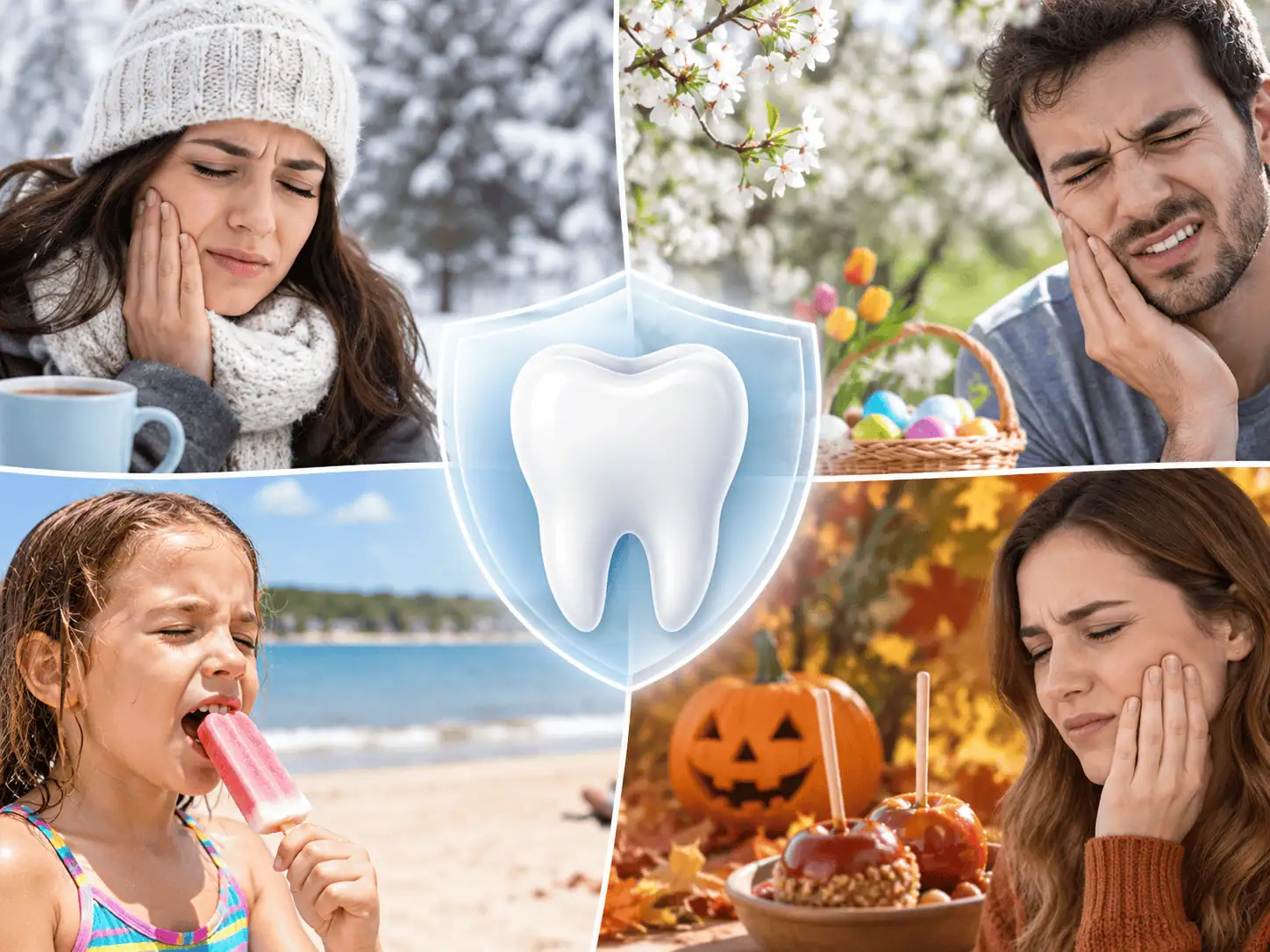
Dental emergencies can happen at any time, but certain problems become more common during particular seasons. Massachusetts has cold winters, active summers, and holiday periods when changes in routine and diet can affect your teeth. A minor dental problem can also turn into an emergency when treatment is delayed. In this blog, we will look at some of the common seasonal dental emergencies in Massachusetts and what you can do to reduce your chances of dealing with one.
What Are the Common Seasonal Emergencies in Massachusetts?
Here’s a closer look at some seasons along with the common dental emergencies faced in Massachusetts:
1. Winter
a. Increased Tooth Sensitivity
Massachusetts winters can be tough on your teeth, especially when temperatures drop well below freezing. Going from the cold outdoors to a warm room can also expose your teeth to frequent temperature changes.
Cold air can make sensitive teeth hurt more than usual. You may notice a sharp sensation when breathing through your mouth outdoors or when drinking something cold.
Sensitivity itself is not always an emergency. However, if it suddenly appears or becomes much worse, it can sometimes point to an underlying issue such as tooth decay, worn enamel, a cracked tooth, or gum recession. It is worth having it checked instead of simply waiting for winter to pass.
b. Cracked Teeth
Winter also brings foods that can put extra pressure on your teeth. Hard candies, nuts, ice, and other tough foods can cause a weakened tooth to crack, especially if it already has a large filling or other damage.
Rapid temperature changes may also make an existing crack more noticeable. If you suddenly experience sharp pain while chewing or sensitivity to hot and cold, it is worth getting the tooth checked instead of waiting for it to worsen.
2. Spring
Spring is often when people start getting back into regular routines after the winter months. That includes catching up on appointments that may have been pushed back.
a. Delayed Treatment
Spring tends to be a little different. The weather itself may not cause many dental emergencies, but it is often the time when people finally deal with problems they have been putting off.
After getting through a long winter, some patients schedule appointments for dental problems they noticed months earlier. A tooth that was mildly sensitive in December may have become painful by March. A small cavity that could have been treated easily may also have progressed.
That is why spring can be a good time to catch up on overdue dental care. If something has been bothering you, there is usually little benefit in waiting until it becomes an emergency.
b. Increased Demand for Preventive Care
Spring is also a common time for routine cleanings and dental exams. These appointments give your dentist a chance to find small problems before they turn into something that requires urgent treatment.
3. Summer
a. Sports-Related Dental Injuries
Summer usually means more time outside. Kids are playing sports, adults are getting involved in recreational activities, and families are travelling more often.
All of that comes with a higher chance of dental injuries.
A ball, fall, collision, or accidental hit to the face can chip, loosen, or completely knock out a tooth. Contact sports carry a higher risk, but injuries can happen during activities that do not seem particularly dangerous too.
A properly fitted mouthguard can provide valuable protection during sports and physical activities.
b. Broken Teeth From Outdoor Activities
Biking, skating, swimming, hiking, and other summer activities can sometimes result in falls or accidents. If you chip or break a tooth, do not try to smooth it down yourself. Save any broken piece if possible and contact your dentist as soon as you can.
c. Vacation-Related Dental Emergencies
Nobody wants a toothache halfway through a vacation. Unfortunately, travel can sometimes expose problems that are already developing.
If you have been putting off a filling, crown, sensitivity issue, or toothache, consider getting it checked before travelling. Dealing with a dental problem at home is usually much easier than trying to find emergency care while you are away.
4. Fall and Holidays
a. Broken Fillings and Crowns
Older fillings and crowns can eventually become loose or damaged. Biting into hard foods during holiday meals can sometimes be enough to dislodge them.
If a crown or filling comes out, avoid chewing on that side and contact your dentist. Leaving the tooth exposed can make it more vulnerable to further damage.
b. Increased Decay From Sugary Holiday Foods
Halloween, Thanksgiving, Christmas, and other celebrations can mean more candy, desserts, sweet drinks, and frequent snacking. You do not have to avoid these foods completely, but repeated exposure to sugar can increase the risk of tooth decay.
Keeping up with brushing, flossing, regular cleanings, and sensible snacking can help protect your teeth during the holiday season.
Tips to Prevent Dental Emergencies
You cannot prevent every dental emergency. Accidents happen. But a few simple habits can reduce your risk and help you catch problems before they become painful.
1. Get Routine Exams and Cleanings Every Six Months
Regular dental exams and cleanings every six months allow your dentist to monitor your teeth and gums. Cavities, damaged fillings, early signs of gum disease, and other concerns can often be identified before they turn into urgent problems.
2. Wear a Custom Mouthguard During Sports
If you or your child plays a contact sport, a custom mouthguard can help protect the teeth from impact. It is especially useful during activities where falls, collisions, or blows to the face are possible.
3. Wear a Nightguard if You Grind Your Teeth
Teeth grinding can gradually wear down enamel and put extra pressure on teeth and dental restorations. If you grind or clench your teeth while sleeping, talk to your dentist about whether a nightguard would be suitable for you.
4. Do Not Ignore Small Chips or Sensitivity
A tiny chip may not seem important. Neither does occasional sensitivity. But these can sometimes be signs that a tooth needs attention.
Getting them checked early gives your dentist a chance to address the problem before it becomes more serious.
5. Seek Treatment Early
One of the simplest ways to avoid a dental emergency is to stop waiting for a problem to become unbearable.
If you have ongoing pain, swelling, sensitivity, a damaged tooth, or a loose restoration, contact your dentist. Early treatment is often easier than dealing with the same problem after it has progressed.
Visit Coral Dental Care for Any Dental Emergencies
At Coral Dental Care, we understand that dental emergencies do not always happen at a convenient time. We make every effort to provide same-day emergency appointments whenever possible. Our team treats a range of urgent dental concerns, including toothaches, broken teeth, lost crowns, swelling, infections, and dental trauma.
If you are experiencing a dental emergency, calling as early as possible gives us a better chance of accommodating you and arranging the care you need. Whether the problem happens during a Massachusetts winter or after a summer sports injury, getting prompt attention can help prevent a small dental issue from becoming a much bigger one.
Need urgent dental care?
Book an appointment with Coral Dental Care today.