
Key Takeaways
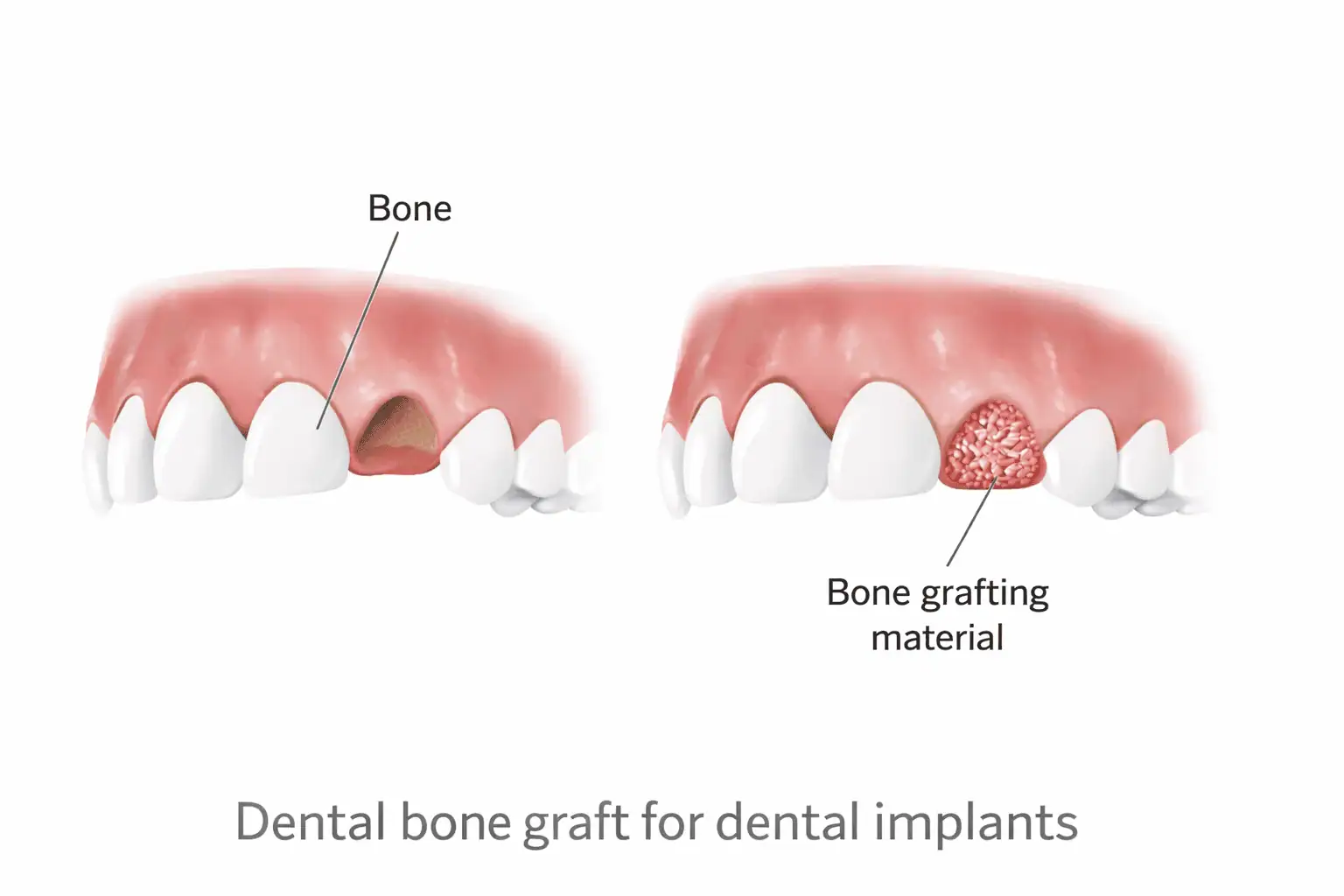
- A dental bone graft rebuilds lost or weakened jawbone, making future treatments like dental implants possible and more predictable.
- Bone loss can occur due to tooth loss, gum disease, trauma, aging, or cyst removal. It often progresses without obvious symptoms.
- There are several types of dental bone grafts, including autografts, allografts, xenografts, socket grafts, and alloplasts, each chosen based on individual needs.
- The dental bone graft procedure is carefully planned and typically heals over three to six months as natural bone replaces the graft material.
- Proper aftercare, avoiding smoking, alcohol, and excessive activity, plays a major role in successful healing and long-term results.
Jawbone loss is a common but often overlooked dental issue. When teeth are missing or gum disease goes untreated, the jaw no longer receives the stimulation it needs to stay strong. A dental bone graft restores this lost structure, making it possible to support implants and maintain facial and oral stability.
This article explains who may need bone grafting, how the procedure works, and what healing typically looks like.
What is a Dental Bone Graft?
A dental bone graft is a restorative procedure designed to rebuild the jawbone that has weakened or shrunk over time. Bone loss often happens quietly. It can follow tooth loss, gum disease, or trauma. Many patients don’t realize it’s happening until a dentist points it out on an X-ray.
The goal of dental bone grafting is simple. It restores strength. It creates support. And it makes future dental treatments possible, especially dental implants.
Who Needs a Dental Bone Graft?
Not every patient needs bone grafting. But many do, especially if bone loss has been present for a while.
-
Tooth Loss or Gum Disease
When a tooth is missing, the bone underneath no longer gets stimulation. Over time, that bone starts to shrink. Gum disease accelerates this process by damaging both bone and tissue.
-
Dental Implant Placement
Dental implants need solid bone to stay stable. If the jawbone isn’t thick or strong enough, a bone graft for dental implant placement becomes necessary before implants can be placed safely.
-
Ongoing Bone Loss
Bone loss can continue for even years after a tooth is lost. Aging, long-term dental neglect, and untreated infections all play a role.
-
Trauma or Injury
Accidents, sports injuries, or long-term grinding can damage jawbone structure. Grafting helps rebuild those weakened areas.
-
Cysts or Tumors
When cysts or tumors are removed from the jaw, they often leave empty spaces. Bone grafting fills those gaps and supports proper healing.
What are the Different Types of Dental Bone Grafts?
There isn’t one “best” graft for everyone. Dentists choose dental bone graft material based on healing needs, location, and long-term goals.
-
Autograft
An autograft uses bone from your own body. This might come from the jaw, hip, or shin. Because it’s your natural bone, the body accepts it easily. Healing is usually strong and predictable. The downside? It requires a second surgical site. That means more healing and slightly more discomfort.
-
Xenograft
A xenograft comes from an animal source, most often bovine bone. It does not turn into your bone immediately. Instead, it works as a scaffold. Your body slowly builds new bone around it. This process takes longer, but it’s very effective for preserving bone shape and volume.
-
Allograft
An allograft uses donated human bone that has been carefully processed and sterilized. This is one of the most commonly used grafts today. It avoids the need for a second surgery. It also integrates well with natural bone over time. Many patients heal just as successfully as with autografts.
-
Socket Graft
A socket graft is placed right after a tooth is removed. This dental extraction with bone graft helps prevent the socket from collapsing. It preserves bone shape and often shortens the timeline for future implants.
-
Alloplast
Alloplast grafts are synthetic materials designed to mimic bone structure. They are biocompatible and safe. These grafts are often used in smaller areas or when natural grafts are not ideal. Healing depends on the material and the patient’s biology.
What Affects the Choice of Dental Bone Graft?
Dentists consider several practical factors before deciding on a graft type:
- Amount of Bone Loss: Larger defects need stronger support
- Overall Health: Smoking and uncontrolled diabetes slow healing
- Implant Size: Larger implants require more bone
- Location: Upper jaw grafts may involve the sinus space
- Age: Bone healing speed changes with age
How is the Dental Bone Graft Procedure Done?
Understanding the dental bone graft procedure helps reduce anxiety. Here’s how it goes step-by-step:
-
Consultation and Planning
Your dentist evaluates X-rays or 3D scans and reviews your medical history. The graft type and placement plan are chosen carefully.
-
Anesthesia and Comfort
Local anesthesia numbs the area completely. Some patients receive sedation, especially for longer procedures.
-
Tooth Extraction (If Needed)
If a damaged tooth is present, it’s removed first. In many cases, grafting is done immediately after extraction.
-
Bone Preparation
If an autograft is used, bone is taken from a donor site. Otherwise, prepared dental bone graft material is used.
-
Gum Access and Cleaning
A small incision is made in the gums. The area is cleaned to remove bacteria and debris.
-
Bone Graft Placement
The graft material is placed precisely where bone support is needed. It acts as a framework for new bone growth.
-
Stabilization
A membrane or special material holds the graft in place. In some cases, platelet-rich plasma (PRP) is added to support healing.
-
Suturing and Closure
The gums are repositioned and stitched closed. The site is protected while healing begins.
-
Healing Phase
Healing typically takes several months. This is known as the dental bone graft healing process, where your natural bone slowly replaces the graft.
How Long Does a Dental Bone Graft Take to Heal?
Most dental bone graft recovery time ranges from three to six months. Healing depends on graft size, location, and your body’s response. Your dentist can confirm when it’s safe to proceed with implants.
Dental Bone Graft Healing Stages & Timeline
Grafting healing doesn’t happen overnight. Although larger grafts might take longer, the following is an approximate range for the dental bone graft healing time:
- First Week: Swelling and soreness peak
- Weeks 2-4: Tissue begins closing
- Months 3-6: bone becomes dense and strong
Aftercare: What Helps and What Hurts Healing of Dental Bone Graft
Do This:
- Take medications as directed
- Eat soft foods
- Use ice for swelling
- Keep the area clean
- Attend follow-up visits
Avoid This:
- Smoking or vaping
- Alcohol
- Touching the graft site
- Straws
- Heavy exercise early on
Many patients ask, “When can I exercise after a dental bone graft?” Light walking is fine. Intense workouts should wait at least a week.
Signs of Failed Dental Bone Graft
Recognizing signs of dental bone graft failure early is critical. If any of these occur, contact your dentist immediately:
- Persistent pain or swelling
- Pus or infection
- Exposed graft material
- Graft movement or loss
A dental bone graft isn’t just a preparatory step. It’s a long-term investment in oral health. When bone is rebuilt properly, future treatments become simpler, safer, and more predictable. If you are considering bone grafting for dental implants, Coral Dental Care provides careful evaluation and personalized treatment planning.
Book an appointment
Frequently Asked Questions
-
Is dental bone grafting painful?
No. The procedure itself isn’t painful due to anesthesia. Mild soreness afterward is common and manageable with medication. Most patients compare it to a tooth extraction.
-
Where does dental bone graft come from?
Bone grafts can come from your own body, a human donor, animal sources, or synthetic materials. Your dentist selects the safest option for you.
-
Are you put to sleep for a dental bone grafting?
Not usually. Most procedures use local anesthesia. Sedation is optional for comfort.
-
How long do stitches stay in after a dental bone graft?
Stitches usually dissolve or are removed within 7-14 days, depending on the type used.
-
Can dental bone grafting cause headaches?
Yes. Temporary headaches can occur due to sinus pressure, swelling, or muscle tension, especially with upper jaw grafts.
-
Can a dental bone graft cause health problems?
Yes, but complications are rare. Infection, swelling, or graft failure can occur, especially in smokers or uncontrolled diabetics.
-
Can dental bone grafts fall out?
Yes. In rare cases, graft particles may loosen, especially if disturbed early.
-
Can I donate blood after a dental bone graft?
It’s best to wait until healing is complete and your dentist clears you.
-
Can I drink alcohol after a dental bone graft?
No. Alcohol slows healing and increases the risk of failure. Avoid it for at least one to two weeks.
-
Can I drink coffee after dental bone grafting?
Yes, but wait at least 24-48 hours. Avoid hot beverages early on.
-
Can your body reject a dental bone graft?
Yes. Rejection is uncommon but possible, especially if healing is disrupted or infection develops.

Dr. Anu Isaac, DMD, runs a successful dental practice in Salem, MA. Dr. Isaac strives for quality on a daily basis and this commitment to quality is reflected in her constant pursuit of advanced training. Her firm belief that even experts need to stay updated about what’s new in the dental field, enables her to provide every patient with optimal oral care. As the founder of Coral Dental Care, she is dedicated to creating healthy, beautiful smiles for her patients and also to educating dental and non-dental community with her engaging articles on all things related to oral health, recent dental innovations, and latest treatment modalities.