

Quick Answer
Protruding teeth are upper or lower front teeth that stick out beyond the normal bite. They can be caused by genetics, thumb sucking, pacifier use, or tongue thrusting, and may lead to a misaligned bite, speech issues, trouble eating, and jaw pain. Treatment options range from braces and Invisalign to veneers, crowns, bonding, or palate expanders, depending on severity and age.
What are Protruding Teeth?
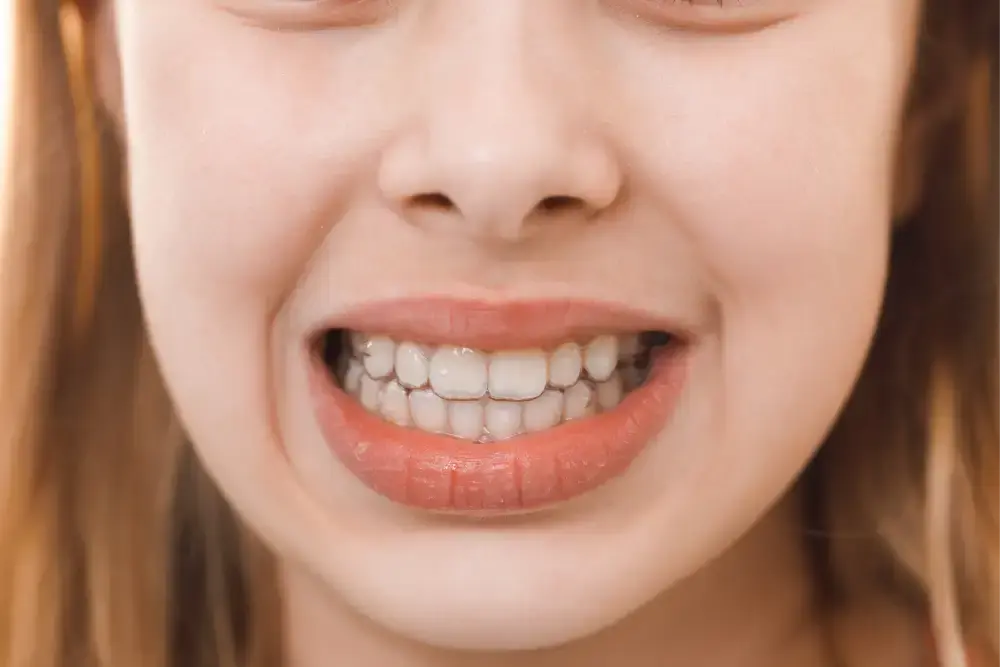
Protruding teeth are the upper or lower front teeth that extend beyond the normal bite. They stand out rather than blending with the surrounding teeth, which can impact appearance and function. Some people are born with this condition, while others develop it due to childhood habits.
What Problems Can Protruding Teeth Cause?
The impact of buck teeth goes well beyond looks. They can cause daily problems that affect your ability to speak, chew, or even rest your jaw.
- A Misaligned Bite
- Trouble in Eating
- Speech Problems
- Pain in the Jaw
Uneven wear or difficulty biting into food can occur if your teeth don’t align properly. As a result, some teeth may face unnecessary pressure. This raises the chance of dental damage or faster enamel wear.
Protruding front teeth might cause discomfort when chewing and biting. You could find it more difficult to handle foods like apples, sandwiches, or even crunchy snacks. It’s possible that you might need to chew such food items with your back teeth more often.
Teeth play a key role in how sounds are formed. When they stick out, it can change how your tongue moves. This may make it harder to say certain letters clearly, like “s” or “th.” Such issues can hurt your confidence in social situations.
In addition to harming your teeth, an uneven bite puts stress on your jaw. Over time, you may experience issues such as headaches, jaw pain, or discomfort in the temporomandibular joint (TMJ).
What are the Leading Causes of Protruding Teeth?
Not every protruding tooth has the same cause. For some, it’s inherited, but for others, early habits play a major role. Dentists can recommend the best treatment by understanding the root problem.
- Genetics
- Habit of Sucking Thumb
- Use of Pacifier
- Thrusting of the Tongue
The shape of your jaw and teeth can be inherited, just like your height or eye color. You may be naturally more prone to developing buck teeth if one or both of your parents have them.
Toddlers often suck their thumbs. However, if this habit continues for a long time, it can put pressure on their teeth. As a result, their teeth may become misaligned and protrude.
Thumb sucking and prolonged dummy use have similar effects. When continued beyond the early years, they keep applying pressure on the front teeth, gradually pushing them outward.
When speaking or swallowing, some people naturally press their tongue against their front teeth. Although this constant pressure might not seem like much, it can gradually push the teeth forward.
How to Fix Protruding Teeth?
Wondering what the treatment options are for fixing protruding teeth? There’s no one-size-fits-all answer! But several treatment options can help depending on the severity, your age, and your goals.
- Braces
- Invisalign
- Veneers
- Crowns
- Palate Expanders
Braces are one of the common treatments used to correct protruding teeth. They gradually move the teeth into better alignment with gentle pressure and can be suitable for both children and adults.
Invisalign uses clear, removable aligners to move your teeth into place. They are discreet, comfortable, and ideal for mild to moderate cases of buck teeth. You might prefer Invisalign over other treatments, as the majority of patients do, because they don’t interrupt your daily life.
In this treatment of protruding teeth, the front surface of your teeth is covered in tiny shells called veneers. They make teeth appear straighter, shorter, or more balanced. But they don’t actually move teeth into position. They are most effective when used for minor cosmetic adjustments.
Crowns are used when teeth require both reinforcement and reshaping. In addition to enhancing beauty, they shield weak or damaged teeth by capping them.
Bonding
Dental bonding involves applying and shaping a tooth-colored resin over your teeth. It’s a faster and less intrusive way to make slightly protruding teeth seem better. Also, it does not require extensive orthodontic work
Palate expanders are generally advised for kids. They extend the upper jaw to make room for teeth to align properly. Expanders lessen the likelihood of severe protrusion in the future by addressing the problem early.
Get Expert Protruding Teeth Treatment at Coral Dental Care
Protruding teeth look different on every patient, and the right fix depends on more than just how far they stick out. At Coral Dental Care in Salem, MA, we take the time to understand your bite, your goals, and your lifestyle before recommending a treatment path.
Whether you’re a good fit for Invisalign, veneers, crowns, or bonding, our team will walk you through your options clearly so you can make a confident decision. We offer flexible financing to make treatment accessible, and new patients can take advantage of our $149 new patient special to get started.
Don’t let protruding teeth affect your confidence
Schedule your consultation at Coral Dental Care today for your perfect smile.
Frequently Asked Questions About Protruding Teeth
-
Can protruding teeth be fixed without braces?
Indeed. Dentists may recommend bonding, veneers, or clear aligners as options in certain moderate cases. Braces or other orthodontic devices, however, are usually a better choice if the teeth are more noticeably pushed forward.
-
What is the best age to treat protruding teeth?
The best time for protruding teeth treatment is usually between ages 7 and 14, when the jaw is still growing, or during childhood or early adolescence. However, orthodontic therapy can also give excellent results for adults.
-
Can protruding teeth affect speech?
Yes. Teeth that stick out can interfere with how the tongue moves, making certain sounds, like “s” or “th,” harder to pronounce clearly.
-
How long does it take to fix protruding teeth?
Usually, treatment lasts 12 to 24 months. The severity of the protrusion and the selected treatment approach determine how long it takes.
-
Can Invisalign fix protruding teeth?
Yes, patients with mild to moderate buck teeth can benefit greatly from transparent aligners like Invisalign. Braces or extra orthodontic treatments can be necessary for more severe alignment problems.
-
Are there chances of my facial shape alteration if I correct my protruding teeth?
Indeed, it often does. Bite correction can improve general jaw alignment and facial balance, both of which improve facial beauty.
-
Do genetics play a role in protruding teeth?
Yes. In many cases, genetics influences jaw shape and tooth position. Still, habits like thumb sucking or tongue thrusting can make the problem worse.
-
Do protruding teeth increase the risk of injury?
Yes. Because buck teeth stick out, they are more exposed and more likely to chip, crack, or break during falls, sports, or accidents.