
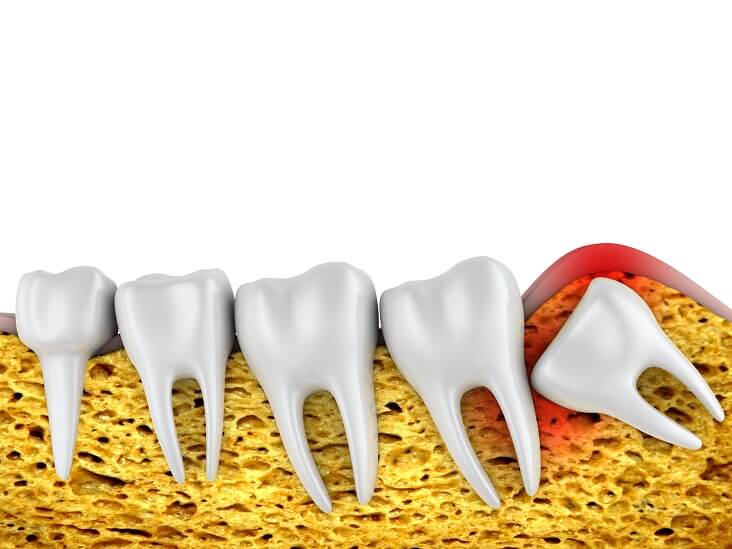
Wisdom teeth are the last set of molars to appear, usually erupting between ages 17 and 25. For many people, these teeth don’t have enough space to grow properly, which leads to complications. Impacted wisdom teeth are the wisdom teeth that come through at an angle or only partially through the gums because they don’t have room to grow. When this happens, they can cause pain, infections, swelling, and even damage to nearby teeth.
Recognizing the early signs you need your wisdom teeth removed can help you prevent more serious dental issues down the road.
When should you get your wisdom teeth removed?
Understanding the right time for extraction starts with recognizing the most common wisdom teeth removal symptoms. If you’re experiencing persistent pain, swelling, or changes in your bite, it may be a sign that your wisdom teeth are causing complications that require professional attention.
-
-
Persistent pain and infection
An impacted tooth that is going to erupt through the gums can cause a lot of pain. This might be because the wisdom tooth might have grown at an angle to the adjoining molar or might not fully erupt from the gums.
The odd angle of this wisdom tooth means that it will start collecting food and dental plaque, leading to tooth decay and a pericoronitis infection.
Symptoms of this infection include painful and swollen gum tissue in the area of the affected tooth. You might also notice a bad smell in the mouth and a discharge of pus from the gum near the tooth.
-
Bleeding and Inflammation
Bleeding gums and inflammation around the back of your mouth can indicate that a wisdom tooth is struggling to erupt properly. When the tooth partially breaks through the gums, it creates pockets where food and bacteria get trapped, leading to irritation and swelling. This can make the gums tender, prone to bleeding while brushing, and more susceptible to infection. Persistent inflammation is a strong sign that the area needs dental attention.
-
Stiff Jaw
A stiff or tight jaw is another common sign that your wisdom teeth may be causing problems. As the tooth pushes through the gums or grows at an angle, it can inflame the surrounding tissues and place pressure on the jaw joint. This can make it difficult to open your mouth fully or cause discomfort when chewing. If the stiffness persists, it may indicate impaction or infection and should be evaluated by a dentist.
-
Difficulty in Eating
Pain due to wisdom teeth might make it difficult to open and close your mouth which makes it difficult for you to swallow food.
This is one of the reasons you should go for immediate wisdom teeth removal.
-
Cavities
Impacted wisdom teeth can put pressure on the surrounding molars creating gaps between your teeth. Thus they become vulnerable to getting food stuck in them which might cause cavities.
-
Crowding or Shifting Teeth
When wisdom teeth begin to erupt, they often push against nearby molars, especially if there isn’t enough room in the jaw. This pressure can cause your existing teeth to shift, leading to crowding, overlapping, or changes in your bite alignment. People who have had braces may especially notice their teeth moving out of place. If you see new spacing or misalignment, it may be a sign that your wisdom teeth need to be evaluated.
-
Sinus Aggravation
Yes, you’ve read it right. Wisdom teeth can also cause sinus aggravation.
Impacted wisdom teeth that grow in the upper jaw can aggravate your sinus problems. These teeth can grow and push against the sinuses and put pressure on them.
Unless a wisdom teeth extraction is performed, you might face sinus pain to add to the pain your wisdom teeth might bring you.
-
Painful Cysts
Sometimes liquid pools into the sac next to the wisdom tooth, it is called a cyst. A cyst can be painful, and if untreated, may turn into a tumor. At this point, wisdom teeth extraction becomes crucial.
-
Get an Effective Solution for your Wisdom Teeth Pain at Coral Dental Care in Salem, MA
If you’re dealing with wisdom tooth pain or swelling in Salem, MA, or nearby areas, Coral Dental Care offers quick evaluation and reliable treatment to help you feel better fast. Our expert dentist, Dr Anu Isaac, pinpoints whether the discomfort is due to impaction, infection, or limited space. When a wisdom tooth extraction is the best solution, we use gentle techniques and modern technology to ensure a smooth, comfortable experience. Addressing the issue early can prevent more serious problems later.
Book your appointment online
Frequently Asked Questions About Wisdom Teeth Removal Symptoms
-
Why do my wisdom teeth smell??
Wisdom teeth can develop a bad smell when they’re hard to clean, allowing food debris and bacteria to get trapped around them. This buildup can lead to plaque, gum inflammation, or even an infection called pericoronitis. As bacteria break down the trapped particles, they release an unpleasant odor.
-
Can your wisdom teeth make you sick?
Yes, wisdom teeth can make you feel sick if an infection develops around them. Irritated or impacted gums may lead to pain, swelling, fever, or bad breath. If untreated, the infection can worsen and affect other parts of the body.
-
How to know if a wisdom tooth is infected?
You may have an infected wisdom tooth if you notice persistent pain, tenderness, or swelling around the area, along with an unpleasant taste or odor. It can also become harder to chew or open your mouth comfortably. In more advanced cases, you might experience fever, pus, or swollen lymph nodes.
-
What happens if my wisdom teeth come in sideways?
When wisdom teeth come sideways, they can press against the gums or nearby molars, causing pain, swelling, or infection. Because they’re hard to clean and can lead to decay or crowding, dentists often advise removing them before they trigger bigger oral health issues.
-
How old are you when you get wisdom teeth?
Wisdom teeth usually grow between the ages of 17 and 25, but the timing can differ for everyone. Some people develop them earlier or much later, while others may never grow them at all.
-
Why do I feel a weird taste in the mouth after wisdom tooth extraction?
A weird taste after a wisdom tooth removal is usually due to healing tissues, traces of blood, or medications, but it can also happen if the area isn’t clotting properly or an infection begins to develop. While it’s often harmless, keep an eye on any increasing pain, odor, or swelling, as these may signal a problem that needs attention.
-
What does a rotten wisdom tooth look like?
A rotten wisdom tooth usually appears darker than the rest, showing brown, black, or gray patches or tiny pits on the surface. You may also notice tenderness, gum irritation, or a persistent bad taste or odor coming from that side of the mouth. In advanced cases, the tooth can feel loose or show signs of infection.
-
What helps with wisdom tooth pain?
You can ease wisdom tooth discomfort by taking OTC pain medication, rinsing with warm salt water, and placing a cold pack on the outside of your jaw. Clove oil and soft foods may also provide short-term relief, but ongoing or severe pain should always be checked by a dentist.

Dr. Anu Isaac, DMD, runs a successful dental practice in Salem, MA. Dr. Isaac strives for quality on a daily basis and this commitment to quality is reflected in her constant pursuit of advanced training. Her firm belief that even experts need to stay updated about what’s new in the dental field, enables her to provide every patient with optimal oral care. As the founder of Coral Dental Care, she is dedicated to creating healthy, beautiful smiles for her patients and also to educating dental and non-dental community with her engaging articles on all things related to oral health,recent dental innovations, and latest treatment modalities.