

Key Takeaways
- Vertically impacted wisdom teeth grow straight but stay trapped due to a lack of space.
- They cause deep pressure, tenderness, bite issues, and jaw/ear discomfort.
- Diagnosis requires X-rays and clinical evaluation.
- If untreated, they can cause root damage, cysts, infection, and crowding.
- Surgical extraction is the main treatment; symptom-free cases may be monitored.
- Coral Dental Care offers expert, safe wisdom tooth extractions.
When you chew something, do you feel a deep pressure in your back molar? No swelling, no obvious sign of infection, yet the discomfort keeps returning? Many people dismiss this as normal wisdom tooth pain, but it’s often the first sign of a vertically impacted wisdom tooth.
While this type of impaction is not as severe as a tooth growing sideways, it can still lead to pain, pressure, and long-term complications if not treated on time. As a trusted family dental clinic in Salem, Massachusetts, Coral Dental Care helps patients understand and manage this condition with expertise and comfort-focused care.
Knowing what an Impacted Wisdom Tooth is will help you recognize the issue timely, and get the right treatment. Let’s understand it in detail.
What Is Vertical Impaction?
A vertically impacted wisdom tooth is a tooth that grows straight or upright but remains trapped beneath the gum or bone because there isn’t enough room for it to fully come out. Even though it is growing at a correct angle, it gets blocked during eruption, which is the main cause of the problem.
Why Do Vertically Impacted Wisdom Teeth Get Stuck?
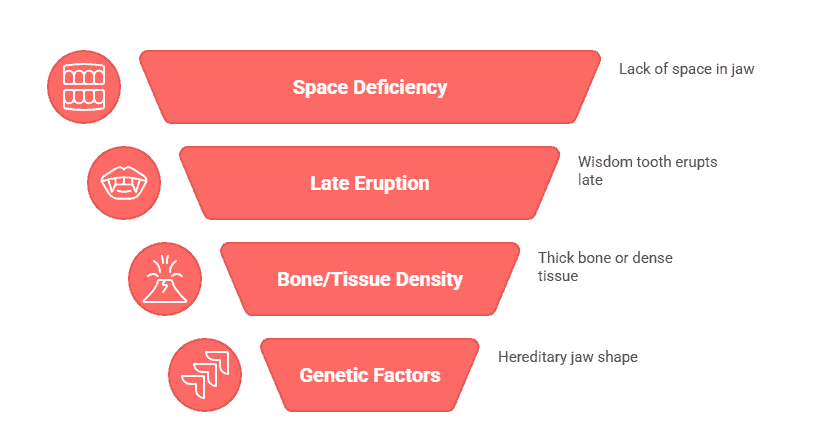
Vertically impacted teeth fail to erupt due to structural and developmental factors, including:
- Space deficiency despite proper angulation: If your jaw size is narrow or you have dental arch crowding, it can stop the tooth from erupting.
- Late eruption timing: Wisdom tooth is the last to come out. If the other teeth have taken up more space by the time the wisdom tooth erupts, it can cause vertical impaction of the wisdom tooth.
- Thick overlying bone or dense gum tissue: If your overlying bone is thick or the gum tissue is too dense, it makes it difficult for the tooth to break through.
- Developmental or hereditary factors: Genetics can also affect the jaw shape and cause vertical wisdom tooth impaction
Signs and Symptoms of Vertically Impacted Wisdom Teeth
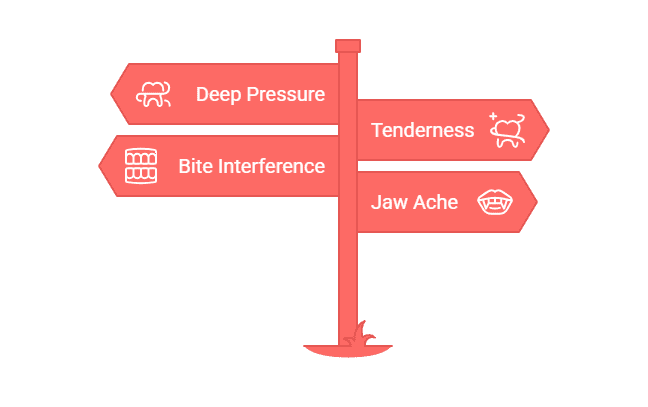
If your tooth is vertically impacted, you may experience subtle or intermittent symptoms, such as:
- Deep pressure or discomfort behind the second molar, especially while chewing.
- Tenderness around the tooth with minimal or no swelling; it may also lead to pericoronitis (inflammation of the gum tissue around your wisdom tooth) if partially erupted.
- Bite interference if the wisdom tooth presses against the back of the second molar.
- Jaw ache when you open your mouth wide, due to ligament strain.
Related Read – 8 Signs You Need Your Wisdom Teeth Removed
Unique Clinical Features vs. Other Impactions
Vertically impacted teeth behave differently from other impaction types:
- Compared to horizontal impactions, vertical ones cause less risk of root damage, but there is deeper, eruption-related pressure.
- Compared to mesial or distal impactions, they have fewer angular issues, but there is more vertical force against the bone or the adjacent molar.
- They often show minimal visible tilt, making them easily detectable in radiographs.
Comparison Table: Vertical vs. Other Impactions
| Type of Impaction | Tooth Angle | Main Issue | Risk Level | Common Symptom |
|---|---|---|---|---|
| Vertical | Upright | Tooth blocked by bone/soft tissue | Moderate | Deep pressure, jaw discomfort |
| Horizontal | 90° sideways | Pushes into the second molar | High | Pain, misalignment, infection |
| Mesial | Tilted forward | Partial eruption issues | Moderate | Gum irritation, pressure |
| Distal | Tilted backward | Difficult eruption path | Low–Moderate | Mild discomfort, trapped cusp |
How Dentists Diagnose Vertical Impaction?
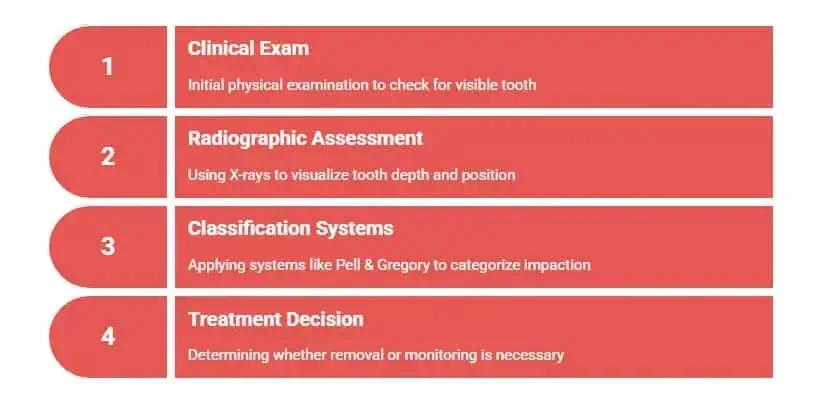
Dentists use both clinical and imaging tools to identify vertically impacted teeth:
- Clinical exam limitations: The tooth may not be visible above the gumline, making physical exams insufficient.
- Radiographic assessment: X-rays, especially panoramic radiographs, reveal depth, angulation, and relation to nearby structures.
- Classification systems: Dentists also use classification systems, like Pell & Gregory, to check the tooth depth and the tooth’s position near the jawbone (ramus), and its root shape, to decide whether the tooth needs removal or can simply be monitored.
Potential Issues Caused by Vertical Wisdom Tooth Impaction
A vertically impacted tooth, though less severe than horizontal impaction, can still create serious oral complications:
- It creates pressure against the roots of the second molar, leading to pain or root damage.
- It can lead to cyst or tumor formation if the unerupted tooth remains enclosed in the bone for years.
- There is a high risk of infection, crowding, or structural weakening of the surrounding bone if you leave it untreated.
Treatment Options for Vertically Impacted Wisdom Teeth
Surgical extraction is the only definitive and reliable treatment for a vertically impacted wisdom tooth. Monitoring is the only non-surgical option, and it’s only safe when the tooth is symptom-free and not causing damage.
Vertically Impacted Wisdom Tooth Extraction
-
Procedure
An incision is made in the gum to access the tooth. In some cases, a small amount of bone may be removed, and the tooth might be sectioned for safe extraction.
-
Anesthesia
The procedure is performed under local anesthesia or general anesthesia for complex cases or patient comfort.
-
Recovery
Expect a few days of soreness and up to two weeks for complete healing. Cold compresses and prescribed medications help manage swelling and discomfort.
A vertically impacted wisdom tooth may look harmless because it sits straight, but it can still cause pressure, pain, and long-term dental issues if ignored. With early evaluation and proper management at Coral Dental Care in Salem, MA, you can protect your oral health and prevent complications before they begin.
If you’re concerned about wisdom tooth discomfort, schedule your consultation today and get the expert guidance you deserve.
Book an Appointment
Frequently Asked Questions
-
Can a vertically impacted wisdom tooth erupt on its own?
Rarely. It may erupt if bone resorbs or space increases, but most remain blocked.
-
Is vertical impaction sometimes unnoticed?
Yes, many cases are asymptomatic and discovered on routine X-rays.
-
How is vertical impaction different from others?
It is different because the tooth is upright but trapped, causing deep pressure rather than angular problems.
-
Is extraction always required?
Extraction is required only if symptoms, infection, or risks develop. Asymptomatic teeth are usually monitored.
-
What happens if it’s left untreated?
If left untreated, possible outcomes include cyst formation, pressure damage, crowding, or pericoronitis.
-
How long is the recovery after extraction?
Mild discomfort lasts a few days; full socket healing can take up to two weeks.

Dr. Anu Isaac, DMD, runs a successful dental practice in Salem, MA. Dr. Isaac strives for quality on a daily basis and this commitment to quality is reflected in her constant pursuit of advanced training. Her firm belief that even experts need to stay updated about what’s new in the dental field, enables her to provide every patient with optimal oral care. As the founder of Coral Dental Care, she is dedicated to creating healthy, beautiful smiles for her patients and also to educating dental and non-dental community with her engaging articles on all things related to oral health, recent dental innovations, and latest treatment modalities.